What We Do
Championing tamariki.
Supporting schools.
Connecting communities.
Vision • Auckland
Clear vision can change the way a child learns, participates and experiences the world.
Our vision programme began with a single South Auckland pilot school, working alongside the University of Auckland Vision Science team to screen tamariki and provide access to optometry care.
What we found was significant: 30% of students needed a full eye examination, and 80% of those went on to receive glasses.
Today, Painga Project has developed its own school-based vision screening system. In 2025 alone, we screened more than 9,000 students across Auckland. We now work in more than 55 high Equity Index primary and intermediate schools, identifying tamariki who may have an undetected vision problem and providing a pathway from screening through to comprehensive eye examination, glasses and follow-up care.
At the heart of that pathway is Celia, our purpose-built mobile optometry clinic, named in honour of the amazing Celia Lashlie. Celia brings comprehensive optometry directly to schools, removing many of the barriers that prevent whānau from accessing care. When fully funded, Celia has the capacity to provide around 7,000 pairs of glasses each year.
We don't just identify a problem. We make sure there is a pathway to care.
Vision • Wellington
Taking what we've learned in Auckland and showing what is possible further afield.
With the support of Whānau Manaaki Kindergarten Association, we piloted our vision screening programme across 16 kindergartens in Porirua and Levin.
The pilot highlighted both the need for early vision support and the challenges of reaching preschool-aged tamariki. Even after three visits, more than 30% of children had yet to be screened, while 17% of those screened were referred to Celia for full eye examinations.
Celia's time in Wellington also gave us the opportunity to extend our mahi into adult vision care.
Working with WELLfed, we screened 60 adults, with 40 requiring a comprehensive eye examination with our optometrist onboard Celia.
At Wellington City Mission, a pop-up clinic provided more than 40 pairs of ready readers, while another 17 adults received Painga Project-funded prescription glasses.
Our Wellington pilot confirmed a clear need for accessible vision care across the region.
We are now seeking the funding needed to establish our vision model in the region and provide accessible eye care for both tamariki and adults.
Hearing • Auckland
A child can't tell you what they're not hearing if they don't know they're missing it.
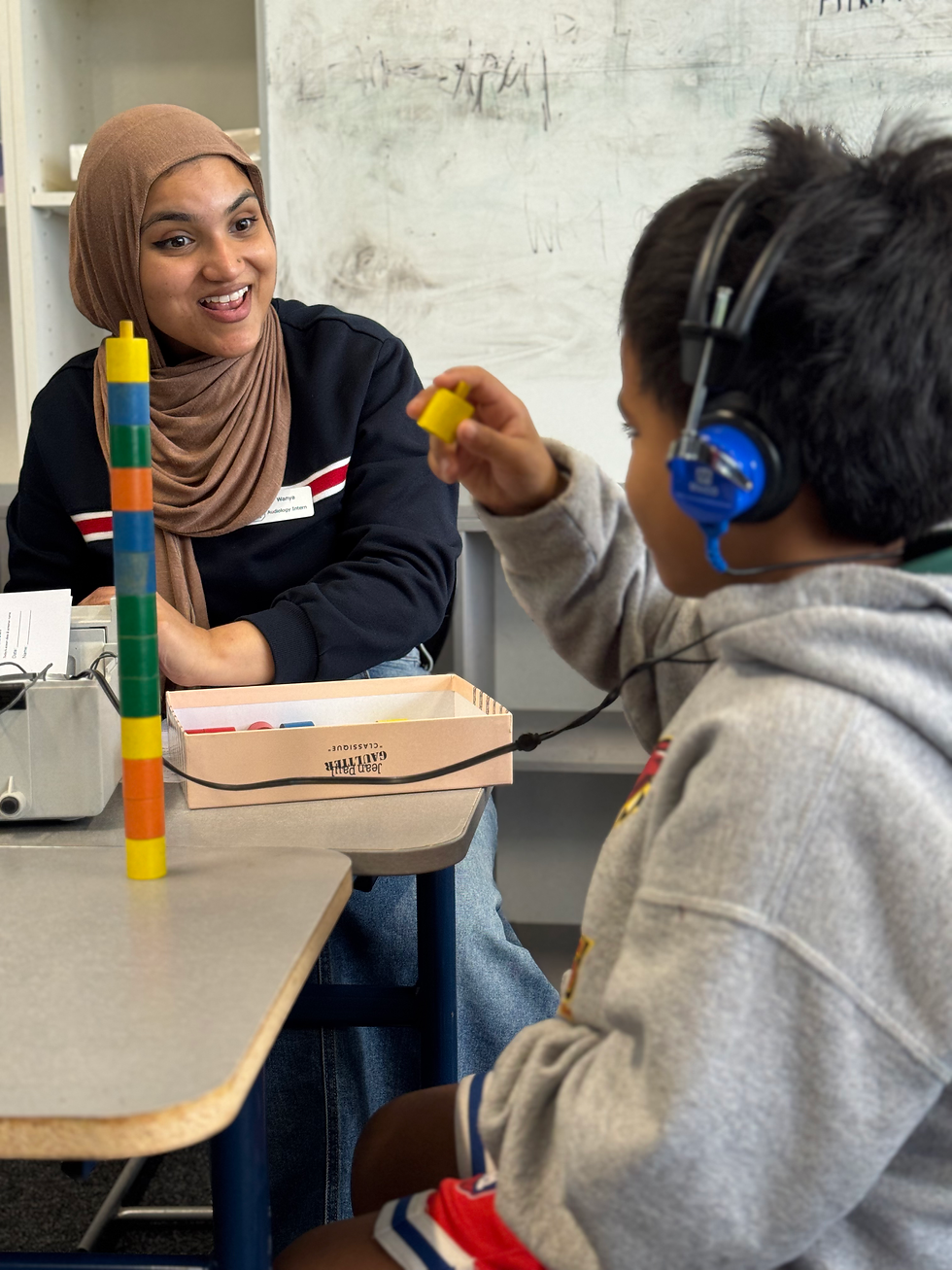
Our hearing programme has been developed with the support and expertise of the University of Auckland Audiology team and The Hearing House, who have helped design and guide our screening programme from the beginning.
We screen new entrants in our primary schools as they begin their educational journey, with rescreening and diagnostic audiology available when further investigation is needed. Around 3% of tamariki enter a referral and support pathway back into the public health system.
Our mobile hearing clinic, Whina, named in honour of Dame Whina Cooper, gives us a dedicated, quiet space for hearing assessment when school lack the extra space or don't have anywhere quiet enough for hearing screening.
With support from our volunteer GP, volunteer audiologists and ear nurses, our work extends beyond screening and diagnostic testing. We can identify and respond to ear-health issues, including treating ear infections and removing wax and foreign objects.
Because finding a hearing problem is only the beginning. What happens next matters even more.
Painga + Hearing & Vision Support
Building a faster pathway from “something isn't right” to getting the right care.
Celia and Whina allow us to respond flexibly to the needs of our schools and communities, but our experience has also exposed a much bigger gap: accessible, timely optometry and audiology care for children and adults.
Painga+ is our response.
We're developing a model that builds on everything we've learned through school-based screening and creates a more responsive community pathway for hearing and vision care.
Painga+ Vision will provide both affordable and fully-funded eye care for tamariki and adults who may otherwise struggle to access it.
Painga+ Hearing will create an immediate triage pathway for GPs, schools and community organisations when a child has a hearing or ear-health concern, helping reduce the long waits that can occur between identifying a problem and receiving the care they need.
It's the next step in our kaupapa: not simply finding the gaps, but building better pathways through them.
Education
Helping tamariki understand their own hearing and vision starts early.
Our work in schools has shown us how important ongoing, engaging hearing and vision education is for tamariki and whānau. Children don’t always recognise when something isn’t quite right with their hearing or vision, particularly when the way they see or hear the world is simply the way it has always been for them.
At the heart of our education mahi is a simple idea: show children from a young age just how amazing their eyes and ears are, how much they do for them every day, and why looking after them matters. By building that understanding early, we can help tamariki develop the knowledge and confidence to take an active role in their own hearing, vision and wellbeing.
Alongside screening and access to care, education can help children recognise changes, understand what healthy eyes and ears look and feel like, and feel confident speaking up when something doesn’t seem right.
We’re continuing to build our knowledge and experience as we develop an education platform and resources that make hearing and vision health interesting, accessible and relevant for tamariki. Through age-appropriate information and engaging learning experiences, we want to spark curiosity about how their eyes and ears work while giving children practical knowledge about how to care for them.
We also want that knowledge to travel beyond the classroom, giving whānau useful information that helps them recognise potential hearing and vision issues and understand when further support may be needed.
Because knowing how amazing your eyes and ears are, how to look after them, and when something doesn’t look, sound or feel right are important lessons to learn from the very beginning.
Painga Foundation Programmes
Painga Project was founded on a simple idea: remove the barriers that prevent tamariki from participating fully in education.
Before hearing and vision became the major focus of our mahi, that philosophy led us into classrooms, gardens, kitchens, vans and the great outdoors. Many of those foundation projects continue today.
Painga Project Wheels
Sometimes opportunity simply needs a ride. Our two 10-seater vans are available free of charge to our schools, making it easier for tamariki to participate in sporting and cultural events, school activities and adventures beyond the school gate.
Ka Ora Ka Ako Lunch Programme
Before the national Ka Ora, Ka Ako programme began, Painga Project was already providing free school lunches to Papakura Intermediate and Kererū Park Campus. When Ka Ora, Ka Ako was introduced nationally, we became the lunch provider for Papakura Intermediate. Today, we continue to prepare delicious, nutritious lunches every day of the school year, helping ensure hunger isn't another barrier to learning.
Mahi Māra
Learning grows beyond the classroom. Mahi Māra brings gardening and growing into our schools, giving tamariki opportunities to learn outdoors with skilled gardening support and access to the equipment and tools they need. We're currently developing a sensory garden for the junior school at Sir Edmund Hillary Collegiate, creating a space for exploration, learning and connection with the natural world.
School Community Support
Sometimes the barriers tamariki and whānau face are immediate and practical. Through the generosity of our community, we receive and distribute support including kai boxes, winter PJs, clothing, Christmas gifts and other essentials to whānau identified by our schools. St Cuthbert's College supports our schools with swimming togs and toiletries, helping ensure students can participate in swimming lessons, while supporters regularly help replenish our much-needed supply of school socks and bucket hats. It's practical support, delivered where schools tell us it is needed.
Kohukohunui
Learning from the whenua, beyond the classroom. Kohukohunui was created to foster kaitiakitanga and inspire the next generation of scientists through outdoor learning in the Hunua Ranges and opening pathways into STEAMM subjects through exploration and experience. COVID put the project on hold, but Kohukohunui is now being reimagined. Our vision begins with an outdoor learning space in Papakura, where our youngest tamariki can start their journey close to home. As they grow, their learning adventures will grow with them, eventually taking them back into the Hunua Ranges and the original Kohukohunui environment.